

My Stake casino Plinko
Introduction
Plinko looks almost disarmingly simple at first glance. A ball drops from the top of the board, bounces off a field of pegs, and lands in a multiplier slot at the bottom. That is the whole visual idea. Yet in practice, My stake casino Plinko is one of those formats that can create more tension in ten seconds than some slot sessions create in ten minutes.
I have spent enough time reviewing casino products to know that simplicity on the surface often hides a very specific kind of player experience underneath. Plinko is a good example. It does not rely on reels, paylines or My Stake Casino bonus guide before choosing a real money casino rounds to keep attention. Instead, it builds suspense through trajectory, pace, and the constant contrast between frequent modest returns and the occasional sharp multiplier that changes the tone of a session.
For Australian players looking at My stake casino Plinko, the key question is not whether the interface is easy to understand. It is. The real question is what this game actually offers once the novelty wears off. How does the logic work? What does the selected risk level really change? How fast can results swing? And who is likely to enjoy this format for more than a few rounds?
That is exactly what I will break down in this review. I will stay focused on the Plinko game itself: how it works, why it attracts attention, where the pressure points are, and what a player should realistically expect before pressing the first drop.
What My stake casino Plinko is and why it stands out
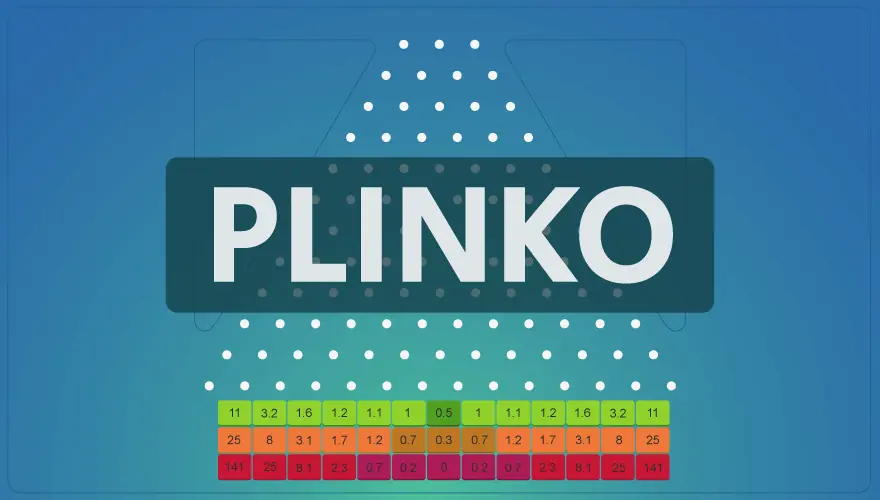
Plinko belongs to the category of instant-win style My Stake Casino games overview for players rather than traditional slots. Instead of spinning reels, the player chooses a stake, sets the number of rows and often a risk level, then releases a ball from the top of the board. As it falls, the ball collides with pegs and shifts left or right until it lands in one of the payout pockets at the bottom.
That description sounds almost toy-like, but the attraction is not accidental. The format combines three things players tend to respond to quickly:
Immediate readability. You do not need to learn paylines, symbol values or layered bonus rules to understand what is happening.
Visible randomness. Players can literally watch the path unfold instead of waiting for an abstract result screen.
Compressed suspense. Every drop has a beginning, middle and result in a matter of seconds.
That last point matters more than it may seem. In slots, suspense often comes from anticipation before the reels stop or from the possibility of a feature trigger. In My stake casino Plinko, suspense comes from movement itself. The ball appears to have possibilities until the very last ricochet. That visual uncertainty is a large part of the appeal.
Another reason the game became so visible is that it is highly watchable. Even when the math behind the result is fixed by the game model, the path of the ball creates a sense of drama that translates well to streams, clips and short-form content. But I would be careful not to confuse watchability with depth. Plinko is not deep in the same way My Stake Casino poker practical player guide or blackjack can be deep. Its strength is elsewhere: in rhythm, clarity and controlled tension.
How the Plinko system actually works in practice
On a practical level, My stake casino Plinko usually revolves around a few adjustable settings. These settings are simple to use, but they have a direct effect on the feel of the session.
| Element | What it does | Why it matters to the player |
|---|---|---|
| Stake size | Determines the amount placed on each drop | Directly affects bankroll pressure and the emotional weight of each result |
| Rows | Changes the height of the board and number of deflections | Usually affects distribution of outcomes and the spacing of multipliers |
| Risk level | Adjusts the payout profile | Changes how often smaller returns appear and how extreme top multipliers can be |
| Auto mode | Launches repeated drops automatically | Speeds up the session but can reduce awareness of result patterns and spending pace |
The core logic is straightforward: the ball moves through a branching path, and each collision sends it left or right. Over many rounds, outcomes tend to cluster more often around the centre, while the outermost pockets usually hold the larger multipliers and occur less often. This is one of the most important things to understand before playing. The board may look evenly spread, but the reward structure is not evenly likely.
That imbalance is the whole point. The centre zones often contain lower multipliers or modest returns because they are reached more frequently. The edges can contain the headline numbers, but those outcomes are naturally harder to hit. In other words, the board is visually symmetrical, yet the practical experience is defined by uneven probability.
A useful way to think about it is this: Plinko is not just a drop animation with numbers at the bottom. It is a distribution model disguised as a simple arcade board. That is one of the reasons many new players misunderstand it at first.
Why the game feels fast, tense and strangely sticky
The rhythm of a Plinko session is one of its defining strengths. There is almost no downtime. You choose a setup, release the ball, get the result, and repeat. Compared with many slots, there are fewer interruptions, fewer decorative sequences and less waiting for the next meaningful moment.
That speed has two practical consequences.
First, the game can feel very clean and efficient. If a player dislikes long spin animations, layered features or complex paytables, My stake casino Plinko can feel refreshingly direct. There is little friction between decision and outcome.
Second, the same speed can make bankroll movement feel sharper than expected. A session can go through a large number of drops in a short period, especially when auto mode is enabled. This is where the game’s simplicity becomes deceptive. Because each individual action looks small and self-contained, players may underestimate cumulative exposure.
One thing I find especially distinctive about Plinko is that it creates a recurring illusion of near-miss drama without needing classic slot tricks. A ball can drift toward a high multiplier lane, bounce away at the final peg, and land on a far lower result. That moment is visually memorable even though, mathematically, it is simply part of the random path. The board does not need flashing symbols to create frustration or excitement; the movement does that on its own.
Another observation worth remembering: in Plinko, repetition does not always feel repetitive. The action is technically the same every round, but the path variation gives the brain enough novelty to keep watching. That is one reason players can stay engaged longer than the minimalist interface would suggest.
Risk levels, probability profile and what they really change
Risk settings are often the most misunderstood part of Plinko. Many players see “low”, “medium” or “high” and assume this is just a general mood selector. It is more precise than that. The chosen level typically changes the payout distribution across the board.
In lower-risk settings, the board usually offers a tighter spread of outcomes. Top multipliers are smaller, but moderate returns may appear more often. This tends to produce a smoother session with fewer violent swings, though it does not remove the possibility of loss over time.
In higher-risk settings, the board often becomes far more top-heavy. The standout multipliers can look dramatically better, but they are balanced by a larger share of low-end results. This means the game can feel cold for stretches and then suddenly spike if an uncommon landing appears.
| Risk setting | Typical session feel | What a player should expect |
|---|---|---|
| Low | Steadier, less dramatic | More modest results, fewer extreme swings, lower upside |
| Medium | Balanced but still variable | A mix of ordinary returns and occasional stronger hits |
| High | Sharp, uneven, emotionally louder | Longer dry patches are possible, but rare top-end outcomes become the main attraction |
This matters because the same Plinko board can feel like a different product depending on the setting. A cautious player may see it as a quick, visual number game with manageable pacing. A high-risk player may experience it as a bursty, swing-heavy format where most of the value is concentrated in rare outcomes.
That is why I would not describe My stake casino Plinko as one fixed experience. It is closer to a framework with several emotional profiles. The interface stays simple, but the session texture changes noticeably.
How risky Plinko really is and who it is likely to suit
Plinko can be mild or aggressive, but it is never fully passive. Even on lower settings, the pace and repeated decision loop create momentum. On higher settings, the game can become distinctly volatile in feel, with many low-value outcomes punctuated by occasional stronger returns.
For the player, the real issue is not just mathematical variance. It is how quickly that variance is delivered. A slow slot with medium volatility may still feel manageable because each spin takes time and the presentation stretches out the experience. Plinko compresses that same emotional movement into a much shorter cycle.
I would say the format tends to suit the following player types:
Players who want clarity. If you prefer seeing exactly what happened rather than decoding paylines and symbol interactions, Plinko makes sense.
Players who enjoy short, repeatable rounds. The game is built for quick decision loops and immediate results.
Players comfortable with visible randomness. The path of the ball becomes part of the entertainment, not just the final multiplier.
It may be a weaker fit for players who need narrative progression, feature variety or the layered anticipation that classic video slots provide. If a player enjoys chasing best My Stake Casino bonus deals for real money players, expanding wilds or bonus rounds with multiple stages, Plinko can feel too bare after the initial appeal fades.
There is also a psychological point worth making. Some players handle abstract randomness better than visual randomness. In slots, a bad result is simply a bad spin. In Plinko, a bad result can feel more personal because you watched the ball “almost” go elsewhere. That can make the experience more engaging, but also more frustrating.
What to understand about session rhythm, outcomes and expectation
Before launching My stake casino Plinko, I think a player should be clear on one simple fact: the game does not owe you a dramatic hit just because several ordinary drops happened in a row. Each drop is its own event within the game model. A sequence of low multipliers may feel like the board is “due”, but that feeling comes from pattern-seeking, not from a promise built into the session.
This is especially important in high-risk mode. Because the standout numbers are visible on the board, it is easy to anchor on them mentally. Players start imagining the session around the rarest outcomes instead of around the actual distribution of likely results. That gap between what is possible and what is common is where many expectations go wrong.
On a practical level, three habits help keep the experience grounded:
Keep the stake proportionate to the pace. A bet that feels small on one drop may become expensive over dozens of rapid rounds.
Treat risk level as a structural choice, not a cosmetic one. It changes the shape of the session, not just the flavour.
Use demo play if available to read the rhythm. Even a short test run can show whether the format actually suits your temperament.
One of the most useful ways to judge Plinko is not by the best multiplier on the screen, but by how comfortable you are with the in-between rounds. If the ordinary results already feel irritating after a few minutes, the format may not be for you.
How Plinko differs from slots and other casino formats
The easiest comparison is with online slots, because that is where many players come from. But My stake casino Plinko behaves very differently from a standard slot session.
Slots usually rely on layered design: reels, symbols, hit frequencies, bonus triggers, themed presentation and feature cycles. Plinko strips almost all of that away. What remains is a single repeated event with adjustable parameters and a visible route to the outcome.
Compared with My Stake Casino roulette and account details, Plinko shares a simple stake-to-result structure, but the emotional presentation is different. Roulette resolves through a wheel landing on one number. Plinko resolves through a mini-journey. That journey matters because it extends suspense without adding complexity.
Compared with crash-style products, Plinko is less about timing and less about player intervention during the round. The decision happens before the drop, not during it. That makes it more accessible for players who do not want reaction-based pressure.
Compared with blackjack or poker-style formats, Plinko offers almost no strategic depth in the classic sense. There is no skill edge through optimal play beyond sensible bankroll control and choosing a risk profile that matches your tolerance. For some players, that is a weakness. For others, it is exactly the attraction.
So the distinction is clear: Plinko is not trying to compete with every casino genre on the same terms. It wins attention by being faster than slots, simpler than table games and more visually active than many instant-win formats.
Strengths and limitations of My stake casino Plinko
Every casino format has a trade-off, and Plinko is no exception. Its strengths are real, but they are tied directly to the same qualities that can become limitations for the wrong player.
Main strengths:
Immediate accessibility. The game is easy to understand within seconds.
Strong visual suspense. The bouncing path creates tension in a very compact format.
Flexible session style. Risk levels and board settings can noticeably change the feel of play.
Fast feedback loop. Players get results quickly without navigating layers of rules.
Main limitations:
Limited thematic depth. There is little progression beyond repeated drops.
Easy to underestimate spending speed. Fast rounds can accelerate bankroll use.
High-risk mode can feel harsher than expected. The pursuit of large multipliers often comes with many low-end outcomes.
Less satisfying for feature-driven players. Anyone who enjoys bonus rounds and evolving slot structure may lose interest quickly.
The practical takeaway is simple. Plinko is strong when judged by clarity, pace and tension per second. It is weaker when judged by variety, narrative progression or strategic complexity.
What to check before starting a real-money Plinko session
Before playing My stake casino Plinko for real money, I would focus on a few practical checks rather than jumping in based on the board’s simplicity.
Review the available risk settings. Do not assume the default mode reflects how you want the session to feel.
Check the multiplier layout. Large top-end numbers look attractive, but the important question is how the rest of the board is structured.
Set a session limit before using auto mode. Automation can turn a short experiment into a much longer run than intended.
Test the pace in demo mode if possible. Some players love the speed immediately; others realise it feels too abrupt.
I would add one more practical note for Australian players browsing Mystake casino or My stake casino pages: do not evaluate Plinko as if it were a slot with a missing bonus round. That is the wrong frame. Judge it on what it is actually designed to do: deliver short bursts of visible randomness with adjustable intensity.
Final verdict on My stake casino Plinko
My stake casino Plinko offers a very specific kind of casino experience. It is not a slot substitute in the full sense, and it is not a strategy-led table game. It is a fast, visually driven probability format built around one repeated action: the drop. What makes it work is not complexity, but the way simple movement creates suspense, pace and emotional variation.
Its biggest strengths are easy to identify. The game is accessible, quick to read and capable of producing real tension without overdesigned presentation. It also gives players meaningful control over session style through risk settings and board configuration. That flexibility is more important than it looks, because low-risk and high-risk Plinko can feel like very different experiences.
The caution point is just as clear. The same speed and simplicity that make Plinko attractive can also make it easy to play too quickly or expect too much from rare multipliers. A player who focuses only on the top numbers may misread the actual rhythm of the game. And anyone who wants layered features, evolving rounds or a stronger sense of progression may find the format too narrow over time.
So, is My stake casino Plinko worth trying? Yes, if you want a clean, high-clarity casino format where tension comes from trajectory and distribution rather than from reels and bonus systems. But it is worth trying with realistic expectations. Plinko is at its best when you understand that the interface is simple, while the session feel can still be sharp, uneven and surprisingly intense depending on the settings you choose.
For the right player, that is exactly the appeal. For the wrong one, it can feel repetitive or too exposed. The difference comes down to whether you enjoy compact suspense and visible randomness more than feature-heavy entertainment. If you do, Plinko earns its place.
FAQ
How does Plinko work on the official My Stake game page?
A player drops a ball that bounces through pegs and lands in a multiplier slot. The slot determines the payout for that round in real-money mode.
Is Plinko available to play in a demo mode or only for real-money play?
Plinko can be started in demo mode for practice. Real-money play is activated once the account balance is used for stakes. Before switching modes, check that the selected mode is shown clearly on the game screen.
Why might Plinko not launch on the official site after login?
A blocked game launch can happen when the browser blocks game assets or when an unstable connection interrupts loading. Refreshing the page and retrying usually resolves it, but device compatibility also matters. If it still fails, try a different browser or use the casino mobile app.
What is the difference between Plinko and other quick casino games in the lobby?
Plinko is focused on multipliers from a single ball drop path, so decisions are mainly about timing and stake selection. Other quick games may use different mechanics like spinning wheels or live dealer tables. If the goal is rapid rounds with multiplier outcomes, Plinko fits that style more directly.
How can balance, limits, and session settings affect Plinko staking on My Stake?
Deposit and withdrawal limits, plus any wagering restrictions tied to active offers, can affect what a player is able to stake. Responsible gambling tools may also limit session length or betting activity. Checking the current account balance and any active restrictions helps avoid interrupted rounds.
Is Plinko better played through the mobile casino app or the mobile web version?
Mobile casino app access often provides the most stable game loading and consistent touch controls. The mobile web version may work well in modern browsers, but loading quality can vary with device settings. If Plinko animations or ball drop controls feel delayed, using the mobile app is typically the smoother option.
